
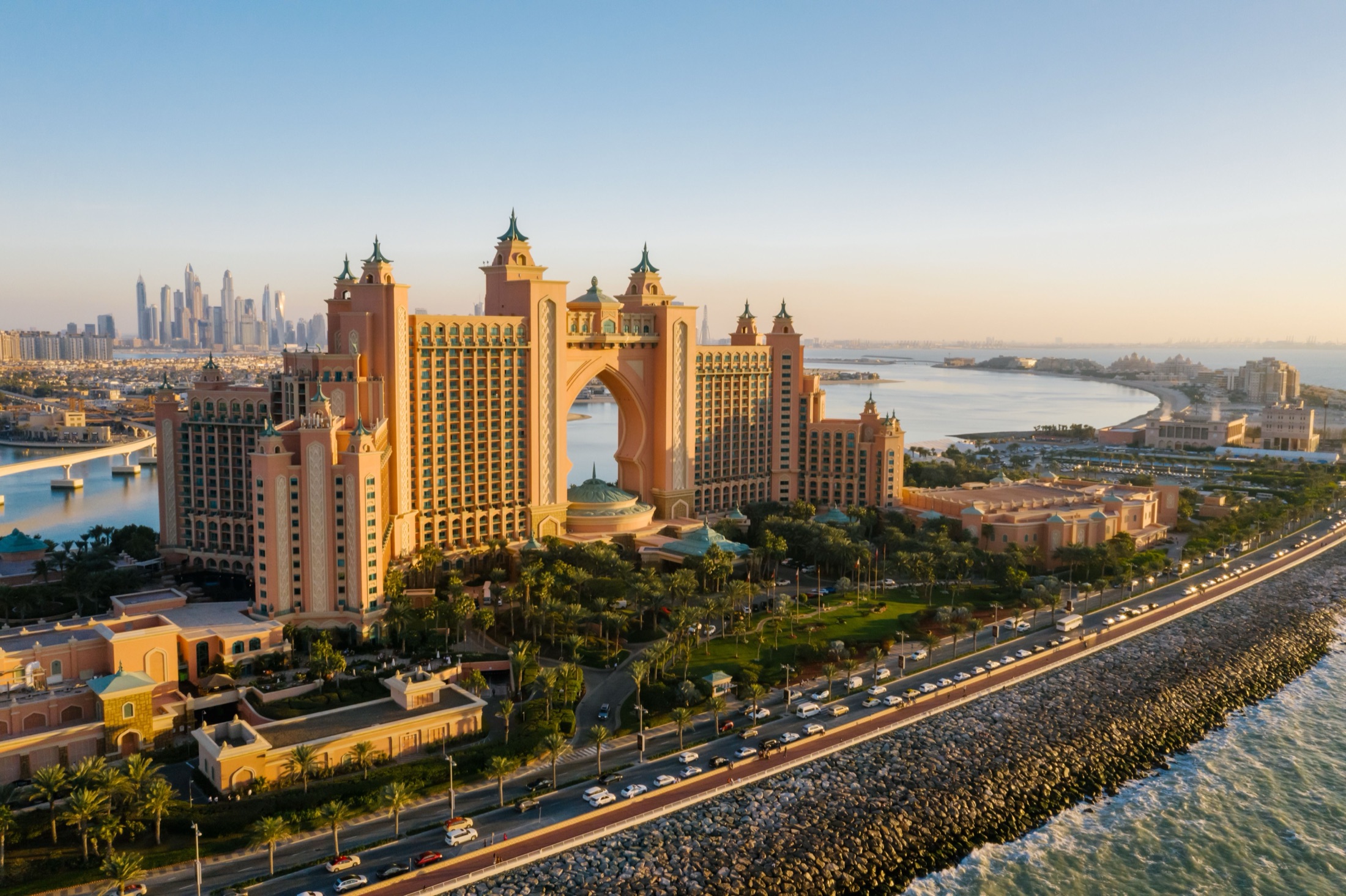
From mehndi to reception, here's how to structure a multi-day Indian wedding in Dubai without the logistics overwhelming the celebration.
An Indian wedding rarely fits into a single day, and Dubai rarely struggles to accommodate that. The city's scale, its warmth of welcome for Indian guests, and its sheer range of venues make it one of the more natural settings for a celebration that unfolds across several days rather than one.
Why Dubai works for multi-day celebrations
Dubai has a large, established Indian community and a hospitality sector well accustomed to the choreography of mehndi, sangeet, wedding and reception. Hotels here routinely host large Indian weddings, which means catering teams already understand live counters, vegetarian and Jain requirements, and the kind of timings that keep a sangeet running until the small hours. Flight connectivity from the UK and Ireland is strong, and for many guests, a direct flight of seven to eight hours feels more manageable than travelling onward into India itself.
Structuring the events
Most multi-day Indian weddings in Dubai follow a familiar arc, though the order and number of events is entirely yours to shape. A typical sequence might run:
Mehndi — an intimate, colourful afternoon or evening, often poolside or in a courtyard, with henna artists, music and a relaxed dress code.
Sangeet — the performance-heavy evening, usually the most logistically demanding, requiring a stage, sound and lighting, and enough floor space for choreographed dances.
Wedding ceremony — whether religious, civil or both, this is usually the most formal of the events and benefits from a venue with genuine architectural presence.
Reception — a larger, often more international gathering, sometimes including guests who weren't present for the earlier, more private functions.
Spacing these across three or four days, rather than cramming them into a single weekend, gives guests time to recover between late nights and gives your suppliers room to reset each space properly.
Choosing venues for each function
Few venues suit every event equally well. A ballroom with strong production capability might be ideal for the sangeet but feel oversized for an intimate mehndi. We generally recommend selecting venues function by function: an outdoor terrace or garden setting for the mehndi, a hotel ballroom or dedicated event space for the sangeet, and either a hotel, a private estate or a striking architectural setting for the ceremony itself. Reusing a single venue across multiple days can work well logistically and often brings a cost advantage, but it does mean the décor team needs enough turnaround time to transform the space convincingly between events.
Guest accommodation across several days
This is where multi-day weddings succeed or struggle. With guests arriving from the UK, Ireland and often India simultaneously, accommodation needs to be block-booked early, with clear communication about which days each event falls on and what dress code or timing applies. Many couples take over one or two hotels entirely, which simplifies transport between the room and each venue and gives the celebration a sense of continuity rather than guests dispersing across the city each evening. We handle this accommodation sourcing and the room-block management directly, which removes a significant amount of the administrative load from you and your families in the months before the wedding.
Food, music and cultural detail
Catering is rarely one-size-fits-all across an Indian wedding. Vegetarian, Jain and regional preferences often sit alongside more international palates among Dubai-based or Western guests, and the better hotels will plan menus accordingly rather than offering a single fixed option. Live counters — chaat stations, dosa counters, paan stands — tend to work particularly well for the mehndi and sangeet, where the mood is informal and guests move between seating and dance floor throughout the evening. Sound and lighting deserve early attention too; a sangeet with twelve family performances needs a technical team briefed well in advance, not one assembled the week of the wedding.
Timing, climate and the legal ceremony
Dubai's cooler months, broadly November through March, are the most comfortable for outdoor events and are correspondingly the busiest for venue availability, so early booking matters more than in quieter months. Many couples choose to complete their legal marriage registration in the UK or Ireland beforehand and treat the Dubai events as the full ceremonial and social celebration — a common approach that avoids navigating two countries' legal systems simultaneously. Whatever structure suits you, we confirm the current requirements in writing with the relevant authority before anything is finalised, so there are no surprises close to the date.
A celebration this layered rewards early, careful planning rather than last-minute decisions, and that's precisely where we come in. We design the full sequence of events, manage guest accommodation across every day of the celebration, and arrange the concierge details that let you focus on the wedding itself rather than the spreadsheet behind it. If a multi-day Indian wedding in Dubai is somewhere in your thinking, we'd be glad to talk it through in a free, no-obligation consultation.